
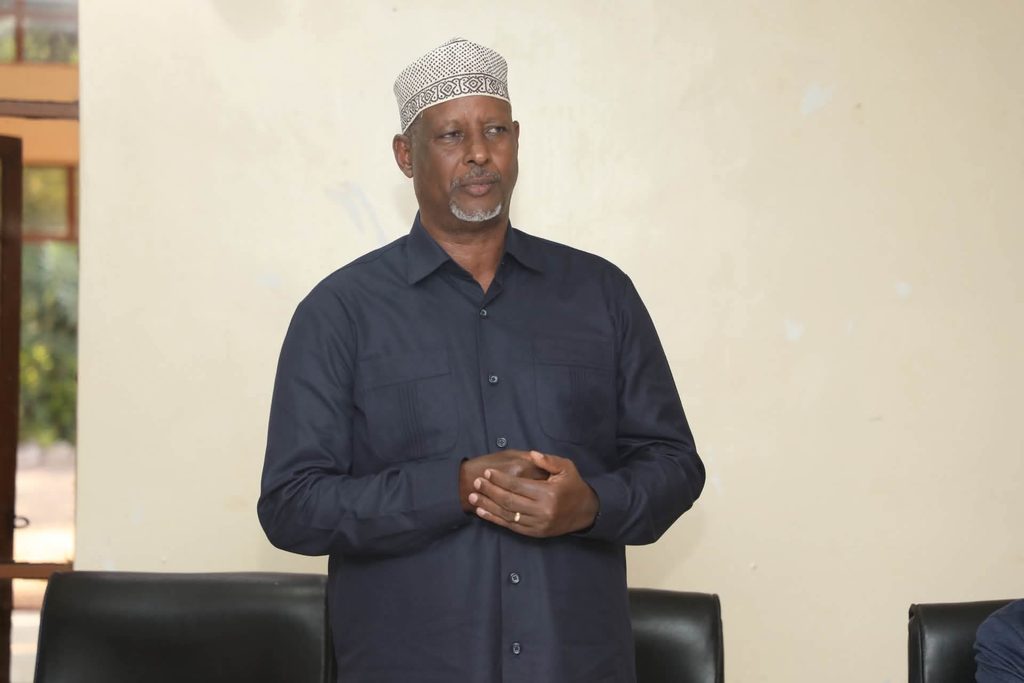
Rasso Challenges Marsabit Governor Mohamud Ali Over Political Dominance Ahead of 2027 Polls
Saku MP Hon. Dido Ali Rasso has challenged Marsabit Governor Mohamud Ali over what he perceives as the governor’s growing assertion of political dominance, reopening debate over the alliances and collective efforts that shaped the county leader’s political journey.
Rasso questioned whether the governor had forgotten the people who stood by him during difficult political moments, arguing that his rise to leadership was not achieved single-handedly but through the support of allies who rallied behind him when his political fortunes were uncertain.
“You are saying that without you, no one can challenge you and secure the seat of governor. Have you forgotten the time we stood together, when everyone else had abandoned you? Do you not recognise that it was our combined efforts that brought you this far?” Rasso posed.
The remarks have introduced a fresh dimension to the unfolding political contest in Marsabit County, with questions emerging over the durability of past alliances, the distribution of political influence and the competing interests likely to shape the 2027 General Election.
The exchange also places renewed attention on the relationship between individual political ambitions and the collective support that often determines electoral outcomes, particularly in regions where community interests, negotiated alliances and the influence of elders play significant roles in political mobilisation.
Political alliances under scrutiny
Rasso’s comments suggest that longstanding political partnerships could become a key issue as leaders begin positioning themselves ahead of the next election.
By invoking the period when he and other allies supported the governor, the Saku MP appeared to challenge the notion that political influence can be attributed to one individual alone.
His remarks raise questions about the recognition of political partners and whether relationships built during previous electoral contests can withstand changing ambitions and shifting calculations.
In competitive political environments, alliances are often formed around shared interests, electoral strategy and the promise of working together towards common objectives. However, those relationships can come under pressure when leaders begin to pursue separate political interests or disagree over who should exercise influence.
Rasso’s intervention brings that tension into the open, suggesting that the history of cooperation between political figures may become an important part of the debate over Marsabit’s future leadership.
The remarks, however, do not in themselves establish the nature or extent of any formal political split between the two leaders. They nevertheless highlight the potential for disagreements over political recognition and influence to affect relationships ahead of the next electoral contest.
Karayuu Dayuu Basuu meeting adds to political debate
The remarks came a day after the controversial Karayuu Dayuu Basuu clan meeting held in Sololo Karbururi, an event that has added to the political discussion surrounding leadership and representation in Marsabit County.
The timing has drawn attention to the role of clan-based consultations and community gatherings in shaping political conversations ahead of the 2027 elections.
In Marsabit, as in several other counties, community interests and consultations among local leaders and elders can form part of the broader political process. Such engagements may provide forums for discussing representation, negotiating common positions and expressing concerns about leadership.
However, the influence of any particular meeting depends on the people involved, the issues discussed and whether the positions emerging from the gathering attract wider support.
The controversy surrounding the Sololo Karbururi meeting has therefore become part of the wider conversation about who speaks for different communities and how competing political interests should be reconciled.
Rasso’s subsequent remarks have further focused attention on the relationship between community-based political engagements and the alliances that bring leaders together during election campaigns.
The developments also underscore the importance of distinguishing between positions expressed at community meetings and the choices that voters ultimately make at the ballot.
Elders and community representation
The emerging political debate has also revived questions about the role of elders in influencing leadership discussions as Marsabit prepares for the next general election.
In communities where elders have traditionally participated in dispute resolution, consultations and the articulation of collective interests, their views can carry considerable political weight.
Such influence, however, operates alongside the constitutional right of individual voters to make independent choices.
The contest over political direction in Marsabit is therefore likely to involve a delicate balance between community consultations, the ambitions of individual leaders and the preferences of the electorate.
For political aspirants, securing support from community networks can be an important part of electoral mobilisation. Maintaining that support, however, may require continued engagement, negotiations and the management of competing expectations.
Rasso’s challenge to Governor Mohamud Ali highlights the potential consequences when political partners disagree over the recognition of past support and their respective roles in determining future leadership.
It also points to the broader question of whether previous electoral cooperation will translate into continued political unity or give way to new alliances as the next election approaches.
2027 contest begins to take shape
Although the General Election remains ahead, the exchange signals that political positioning in Marsabit is becoming increasingly pronounced.
Leaders and their supporters are likely to scrutinise past partnerships, current relationships and emerging community positions as they assess the prospects of different candidates.
For the incumbent governor, the unfolding debate presents a reminder that political authority is exercised within a wider network of relationships involving allies, community leaders and voters.
For Rasso, the challenge places him at the centre of a conversation about the contribution of political partners and the importance of collective effort in electoral success.
Whether the exchange develops into a more pronounced political confrontation or leads to renewed consultations between the leaders remains to be seen.
Much will depend on how the two camps respond, whether other political figures join the debate and how community stakeholders position themselves in the months ahead.
The developments also leave open the question of whether the disagreements will remain centred on political recognition or expand into wider differences over representation, alliances and the future direction of the county.
Ultimately, the 2027 gubernatorial contest will be determined by voters, with candidates required to convince the electorate of their leadership credentials, development priorities and capacity to represent the county’s diverse interests.
For now, Rasso’s pointed remarks have placed past alliances firmly back on the political agenda in Marsabit, challenging the idea that any leader’s electoral strength exists independently of the networks and collective efforts that helped build it.
As political realignments continue, the durability of relationships among the county’s influential figures could prove an important factor in shaping the campaign ahead. Whether old partnerships endure or new coalitions emerge, the unfolding debate underscores the increasingly competitive environment in which Marsabit’s next gubernatorial contest is likely to be fought.