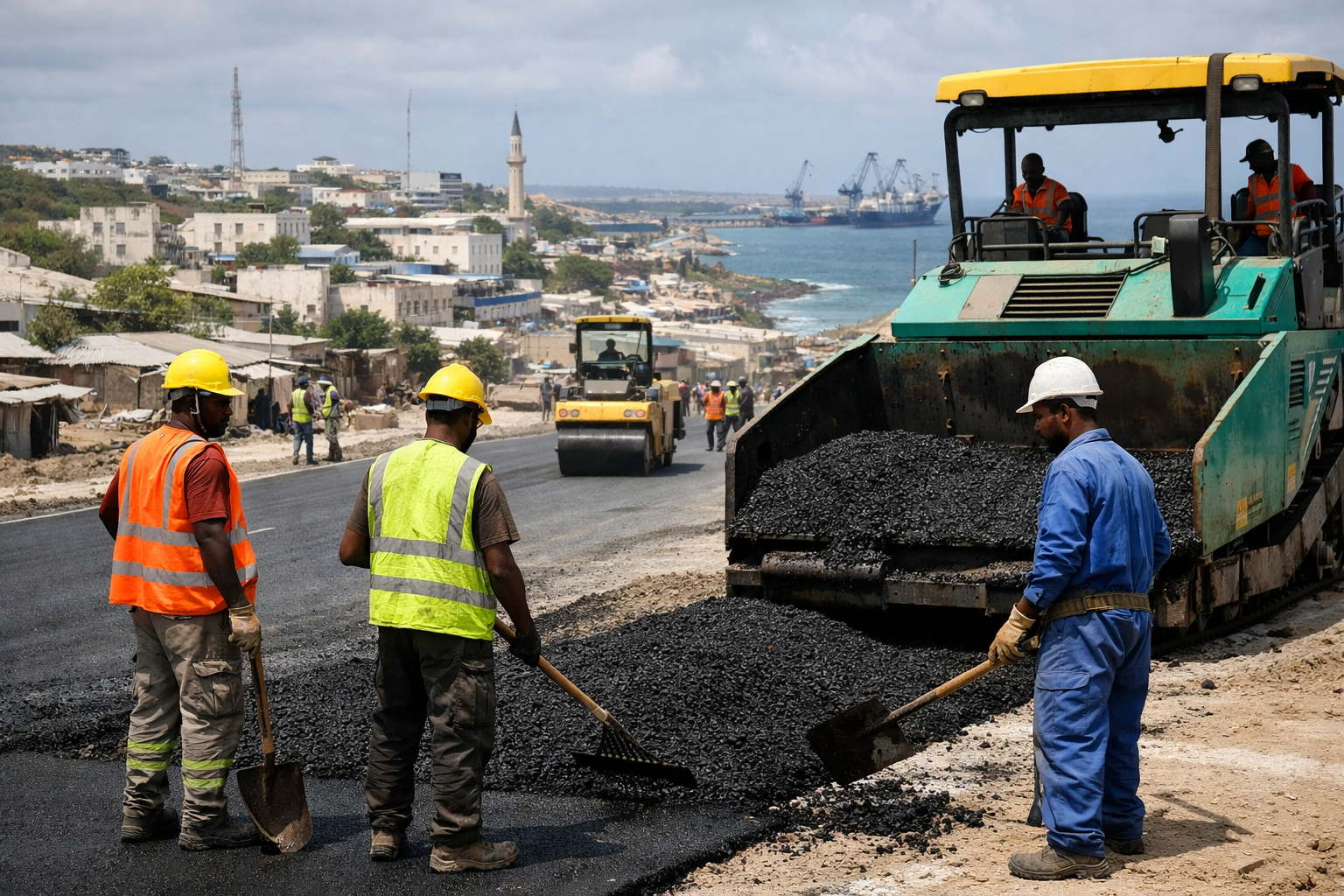
Infrastructure development has been identified as a critical driver of Somalia’s economic growth, with stakeholders highlighting the importance of improved transport, energy, and public facilities.
Officials from relevant ministries stated that investments in roads, ports, and energy infrastructure are essential to reducing business costs and improving market access. They noted that improved infrastructure supports trade, service delivery, and private sector competitiveness.
Business leaders have welcomed infrastructure initiatives, citing reduced transport times and improved reliability in areas where projects have been implemented. They emphasised that continued investment would enable businesses to expand operations and reach new markets.
Development partners have also underscored the role of infrastructure in supporting economic resilience and job creation. They noted that coordinated planning and maintenance are necessary to ensure long term benefits.
Economists observe that infrastructure gaps remain a significant constraint on growth, particularly in rural and emerging commercial areas. They stress that addressing these gaps will require sustained public investment and private sector participation.
Authorities reaffirmed their commitment to prioritising infrastructure development as part of broader efforts to strengthen the economy and promote inclusive growth.