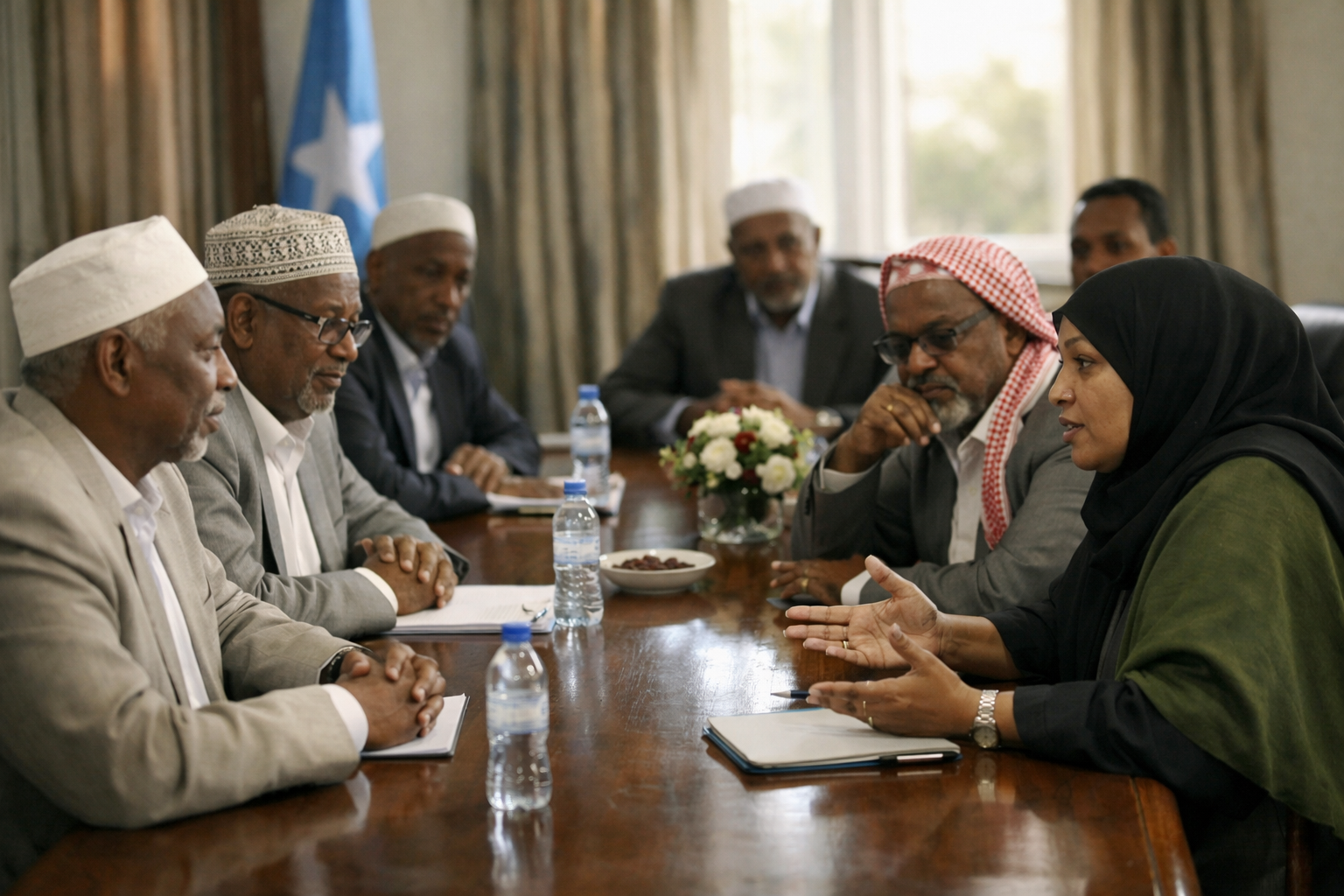
Somalia’s political progress continues to depend heavily on the ability of leaders to build and sustain consensus across federal and regional institutions. As governance reforms advance, consensus building remains a defining factor in maintaining stability and public confidence.
The country’s federal system requires close coordination between the Federal Government and Federal Member States. Divergent political priorities and institutional interests have, at times, slowed decision making and complicated reform processes. Analysts note that inclusive dialogue has often proven more effective than unilateral action in addressing such challenges.
Past political agreements have demonstrated that negotiated outcomes, though time consuming, tend to produce more durable results. When key stakeholders are involved in decision making, implementation is more likely to be accepted and sustained across different levels of government.
Public trust also plays a critical role. Citizens closely observe how political leaders engage with one another, particularly during periods of heightened tension. Transparent consultations and clear communication help reduce uncertainty and limit the spread of misinformation.
Observers argue that strengthening consensus driven mechanisms will be essential as Somalia navigates future political milestones. They emphasise that compromise, institutional respect, and adherence to constitutional principles remain vital to long term governance and stability.